
Why I’m Adding the Sony FX3A to My Wildlife Setup
A compact cinema camera that fits my field workflow
After a lot of thinking, testing and comparisons, I’ve decided to add the Sony FX3A to my kit. It’s not replacing anything—it fills two specific gaps I’ve been aware of for a while. The difference is that this camera solves them without compromise or bulk. It fits how I actually work in the field.
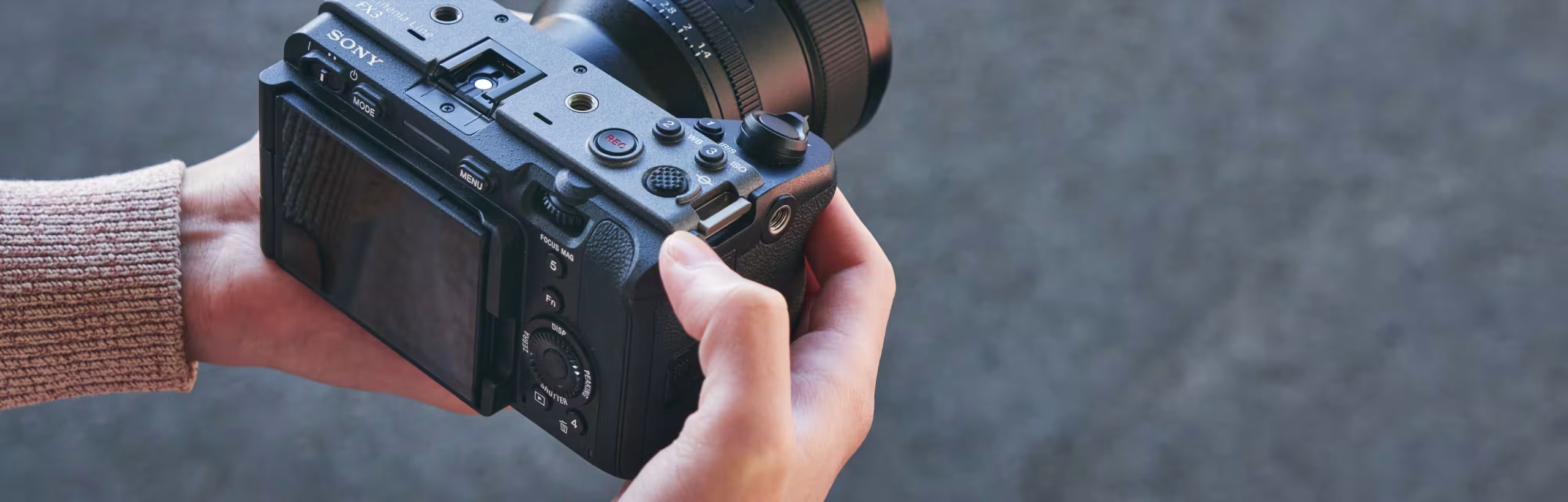
1. A True Cinema Camera That Doesn’t Compete for Space
When I’m heading out on a wildlife photography trip, stills come first. That’s always been the priority. But I also want to bring back high-quality video footage—either for story-driven content or documentary-style sequences—without bringing a separate, bulky cinema rig.
The FX3A finally checks that box:
- Full-frame video with S-Log3 or S-Cinetone
- No overheating, even during long takes in Africa
- HDMI Raw output, pro audio XLR inputs, and internal 10-bit
- A rugged, compact form factor that doesn’t compromise the rest of my pack
This is a proper cinema camera that can travel anywhere without getting in the way.
2. A Serious Behind-the-Scenes Camera
Up until now, I’ve been using the DJI Osmo Pocket 3 for behind-the-scenes footage. It’s lightweight and fine for basic clips, but it doesn’t hold up in professional post-production. Once I start grading alongside footage from the Burano or A1 II, the difference is obvious.
The FX3A, paired with the Sony 28–70mm f/2, becomes a compact, high-quality BTS solution that actually integrates into my main workflow. I can rig it, hand it off, or keep it rolling on a tripod while I’m focused on stills—and it delivers proper color, depth, and low-light performance every time.
It’s also a great tool for environmental context shots. When I need B-roll while the wildlife action is happening, this lets me capture it without having to interrupt or break down my main setup.
Why Not the A1 II or FX30?
The A1 II is fantastic for hybrid shooting, but I don’t want to constantly switch between photo and video when I’m focused on stills. I need a second camera that’s built for video—dedicated and optimized for that job.
The FX30, on the other hand, is capable but has some real limitations:
- Smaller APS-C sensor: The look, depth of field, and FOV don’t match my full-frame footage.
- Low-light is a weak spot: The FX3A, with its dual native ISO 800/12800, performs far better in low light—especially important when filming in hides or during early morning and late evening conditions.
- Rolling shutter: The FX3A has a much faster readout, which makes it more usable for handheld work, panning, or quick wildlife movement without distortion.
And on a side note, the new FX2 just has terrible readout speed, would never work handheld.