Craft
Capturing the Wild: Why Visual Cues Matter More Than Storytelling
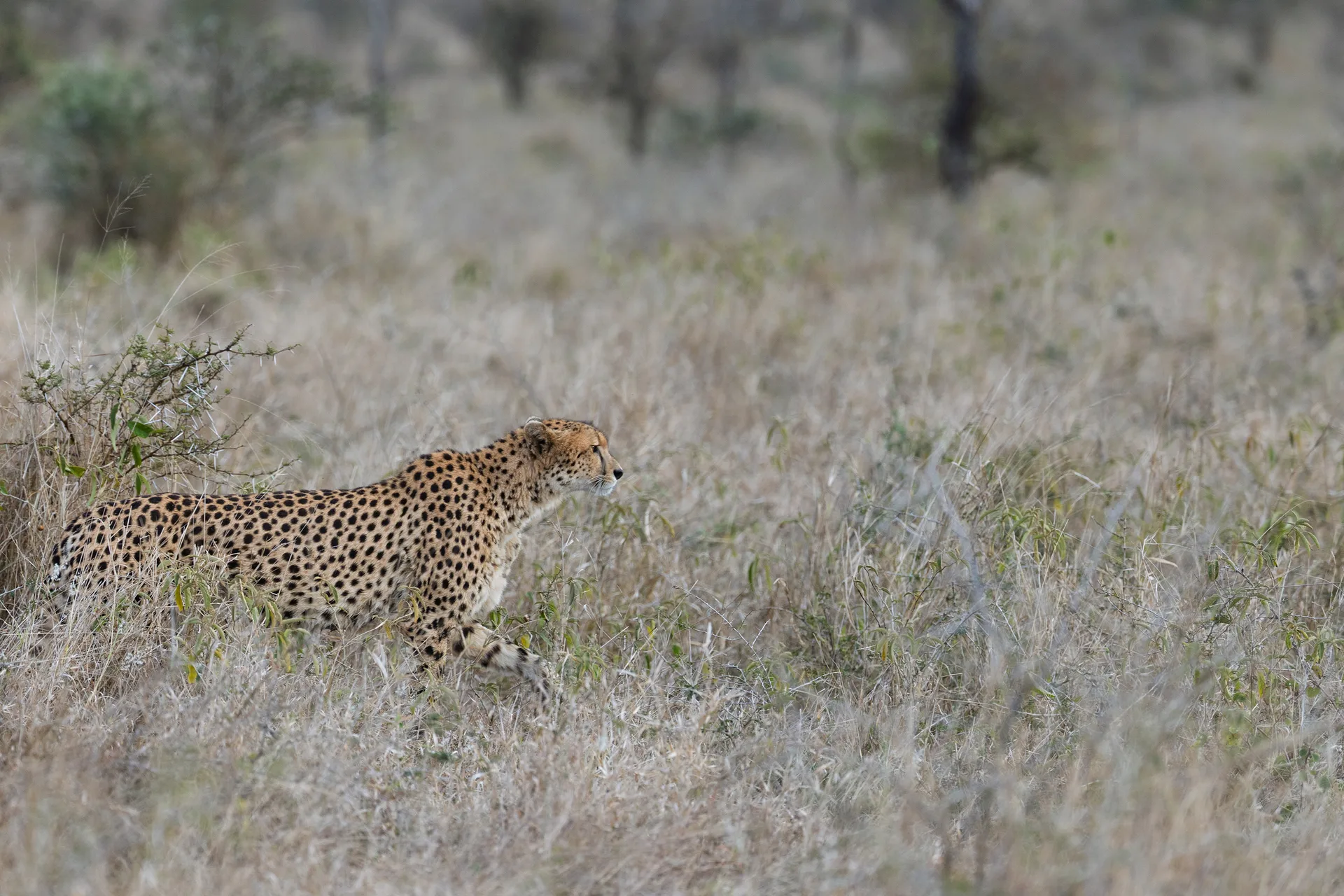
For years, I believed the mantra that “great photos tell stories.” It’s repeated endlessly by photographers, instructors, and books. But after thousands of frames that failed to hold the magic of the moment, I realized something: wildlife photography doesn’t compress a full narrative into one image. It uses visual cues, clues within a frame, to spark the viewer’s imagination. That shift changed everything about how I shoot.
Why “Storytelling” Falls Short
Wildlife encounters are thrilling: a Cheetah pushing through tall grass, an eagle plunging toward the sea, a deer pausing in morning mist. You press the shutter, certain you’ve captured a story. But when you review the photo, the tension you felt often isn’t there.
The truth is simple: storytelling depends on time. Books and films build arcs over minutes or pages. A photo is a fraction of a second. There’s no beginning, no end, just a frozen moment. Trying to squeeze a full narrative into that moment often leads to frustration and flat results. The advice to “tell a story” sounds poetic, but it rarely helps in practice.
Visual Cues: The Photographer’s Real Language
The strongest wildlife images don’t hand the viewer a complete story; they plant seeds. A raised hackle, a shadow stretching across snow, a mother’s trunk wrapped protectively around her calf. These details invite the viewer to imagine what came before and what might happen next.
Visual cues in wildlife photography might be:
- Behavior: A wolf stiffening, caught between fear and aggression.
- Environment: Dust rising on the savanna, or a frosted meadow at dawn.
- Interaction: A heron lifting a fish, the instant after the catch.
- Objects or traces: Tracks in the mud, feathers scattered in grass.
Think of a cheetah crouched low in golden grass, eyes locked on unseen prey. The frame doesn’t reveal the hunt’s outcome, but its tension makes you lean in. Or picture a polar bear on fractured ice, breath rising in the cold. The cues alone (ice, breath, solitude) evoke survival without spelling it out.
How to Work With Visual Cues
Treat each scene like a puzzle: what detail carries the weight of the moment?
- Spot the cue first. Before lifting the camera, ask what makes the moment alive. The gleam in an owl’s eye? The ripple from a crocodile’s snout? The wind pulling through a lion's mane? Identify it.
- Compose with intent. Build your frame around the cue. Place it where the eye naturally lands, strip away clutter, and let the detail breathe.
- Edit to emphasize. Post-processing is about guiding attention, not tricks. A subtle dodge on fur texture, a vignette that pushes the gaze toward the eyes. Little refinements that make the cue sing.
From Single Frames to Series
This is where it gets interesting: if a single frame thrives on cues, a series of frames can deliver the full narrative that one shot cannot. Instead of forcing an entire story into one photograph, think in sequences.
- One image sets the stage with atmosphere.
- Another captures the behavior or tension.
- A third might resolve it with interaction or aftermath.
Together, the photos unfold like chapters in a short film: each image strong enough to stand on its own, but collectively forming a richer, more complete arc. A series of a leopard stalking, pausing, leaping, and then resting with its prize does what a lone image never can: it lets the story breathe.
Once you start looking for cues, and building them into series, the field opens up. A fox’s tail twitch, an antelope’s tracks, the hush of wings overhead: all become building blocks. Your photography stops chasing “stories” inside single frames and instead balances two modes: the suggestive power of cues, and the narrative depth of sequences.
That approach works anywhere: with mirrorless rigs in the Arctic or a phone in your local park. Some images will shine alone, carried by mood or texture. Others will click into place as part of a larger story. Both are valid, both are powerful.
So next time you raise your camera, don’t ask, What’s the story? Ask instead: What detail sparks imagination, and do I need one frame, or a whole series, to let it unfold? That’s where wildlife photography truly comes alive.