Craft
Nikon Just Announced My Dream Wildlife Lens
It has been a while since I wrote anything about camera gear. Finally some interesting camera gear to write about!
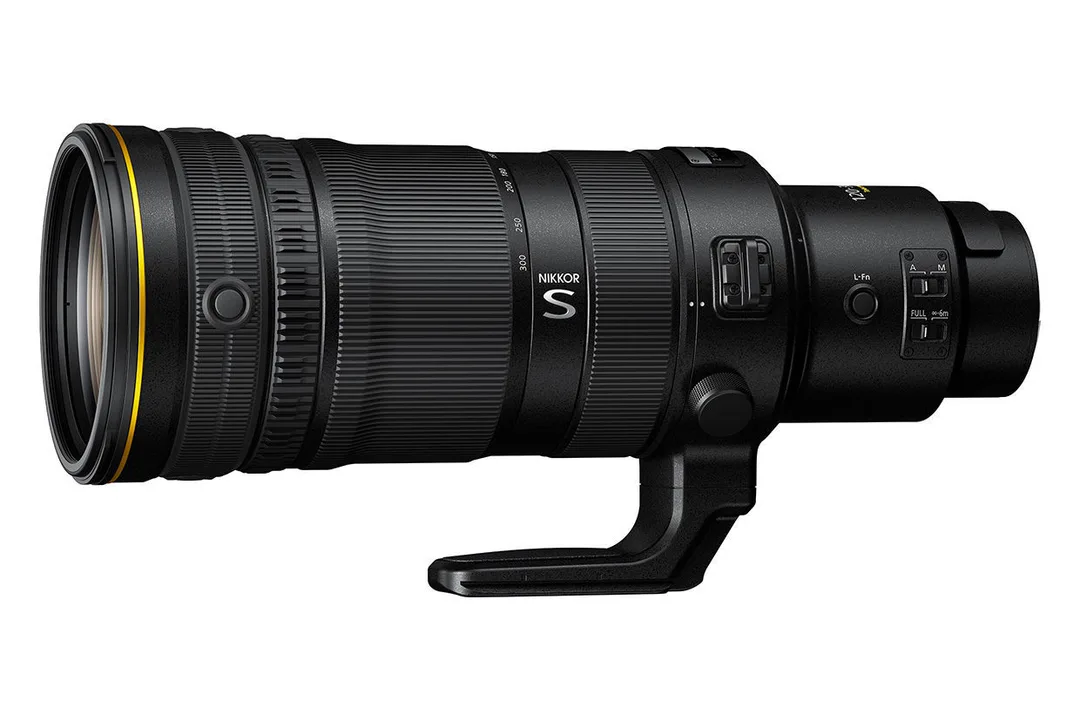
Back in May, Nikon announced the development of the NIKKOR Z 120–300mm f/2.8 TC VR S. I wrote about it at the time, and now, a few days ago, they finally made the official announcement. First deliveries are expected in November.
A funny side note about Nikon is that I don't think I've ever even held a Nikon camera in my hands. Not once, as far as I can remember.
I shot Canon for more than 20 years, and in recent years I've been shooting Sony Alphas as well. Could it be five years already? Time flies.
I've also wanted to go the Fujifilm GFX route for wildlife photography. I really wanted to see what I could do with that medium-format sensor in Africa. But my wife has never really let me take the GFX on my trips, because she might decide to go out and photograph some landscapes while I'm away and therefor need the camera to be at home. :) Well I managed to bringn it once to Mana Pools in Africa, and it's been to Flatanger in Norway photographing eagles with Ole-Martin.
And to be fair, the GFX has its limitations when it comes to autofocus for wildlife. Then there are the weight restrictions on flights. I couldn't just bring the GFX and leave everything else at home. I would still need my Sony A1 II and a 400/2.8, so suddenly I'm travelling with two systems. But when the shots lands perfectly on the GFX wow they are something else!
Anyway, back to Nikon.
I have absolutely no doubt that the image quality from this Nikkor glass will be amazing. And looking at the specifications, this could be THE DREAM lens for a photographer like me, spending most of my wildlife photography time with larger animals. I never been a birder, eg i do photograph birds of prey, vultures, but I have no real interest in birds, and I dont even raise my camera for a smaller birds.
A 120–300mm f/2.8 with a built-in 1.4x teleconverter, giving you a 168–420mm f/4 at the flick of a switch. That is a pretty amazing range to have in one lens in africa or pantanal.
Of course, we've had lenses with built-in teleconverters before. Back in the day, Canon made the EF 200–400mm f/4L IS with the 1.4x Extender. I still own mine. It's collecting dust, and I haven't taken it out in years.
I didn't use it that much even when it was new either.
It was simply a little too heavy, and I generally preferred my Canon 400mm f/2.8. Back then, ISO performance was a real issue. Going above ISO 3200 was something I tried to avoid unless I really had to. Having f/2.8 instead of f/4 made a difference, especially early in the morning and late in the evening when the animals were most active.
I own the Canon RF 100–300mm f/2.8 since it was launced by Canon. With a 1.4x extender, it becomes a 140–420mm f/4. So in terms of focal length and aperture, there isn't much separating them.
But having the teleconverter built into the lens is something I really like about Nikon's design. No need to take the lens off the camera, attach an extender and then put everything back together. Just a quick switch with your thumb and you got more reach. It's both the convenience of speed to switch between converter on or not, and the dust issue. Both are real problems in the field.
And the Nikon weighs only about 145 grams more than the Canon, despite having that built-in teleconverter. That's amazing. I love that lately new lens releases you keep getting lighter and lighter (on a side note I can't wait for Sony to release a new 400/2.8 thats really lightweight!)
But that price...
The Canon RF 100–300mm f/2.8 is already a very expensive lens, retailing for around 139,900 SEK here in Sweden. The Nikon you have to pay a whooping 189,990 SEK with VAT. That's another 50,000 SEK for the convenience of a built-in converter.
I bought my Canon RF 100–300mm when it was launched. I got a "good deal" from my trusted camera gear supplier. But even with that discount, I remember hesitating when I made the purchase decision.
I have never regretted buying it, though. The opposite as i wrote numerous times it's the only reason i didn't sell my canon gear when i bought the Sony Alphas.
It's an amazing lens, and I've lost count of how many Canon shooters have tried mine, been completely blown away by it, and then ordered one themselves. They try it, go "Wow!", and suddenly that rather expensive lens is on their shopping list. :)
So I know very well that an expensive lens can turn out to be worth every krona. But 189,990 SEK it's a stretch!
For most individuals buying camera gear with their own money, that price is simply out of reach. Even as a business expense, where the VAT is deductible, I would say Nikon has priced this lens too high.
It will be interesting to see how successful it becomes, particularly among fellow wildlife photographers shooting Nikon.
On our photography tours, the vast majority of guests seem to shoot either Canon or Sony. We do have Nikon shooters as well, of course, but my feeling, purely based on the photographers I meet, is that Nikon has a rather small share compared with Canon & Sony.
And I wonder how many of those Nikon photographers will be willing to spend almost 190,000 SEK on this lens.
Of course, I said something similar to myself when I bought the Canon. And then ended up loving it so much that I never regretted spending the money. Maybe Nikon owners will have exactly the same experience.
For me, though, there is absolutely no desire to get into the Nikon ecosystem. I'm already heavily invested in Canon and Sony, and I'm happy with what I have. This lens won't change that.
But I can still look at it and think, damn, that's MY dream lens. My gut feeling tells me we won't see anything similar from Sony anytime soon, they have their prime 300/2.8 thats super light weight, and from what I think it's quite successfully.