Craft
What Lethal Weapon Taught Me About Shooting Wildlife
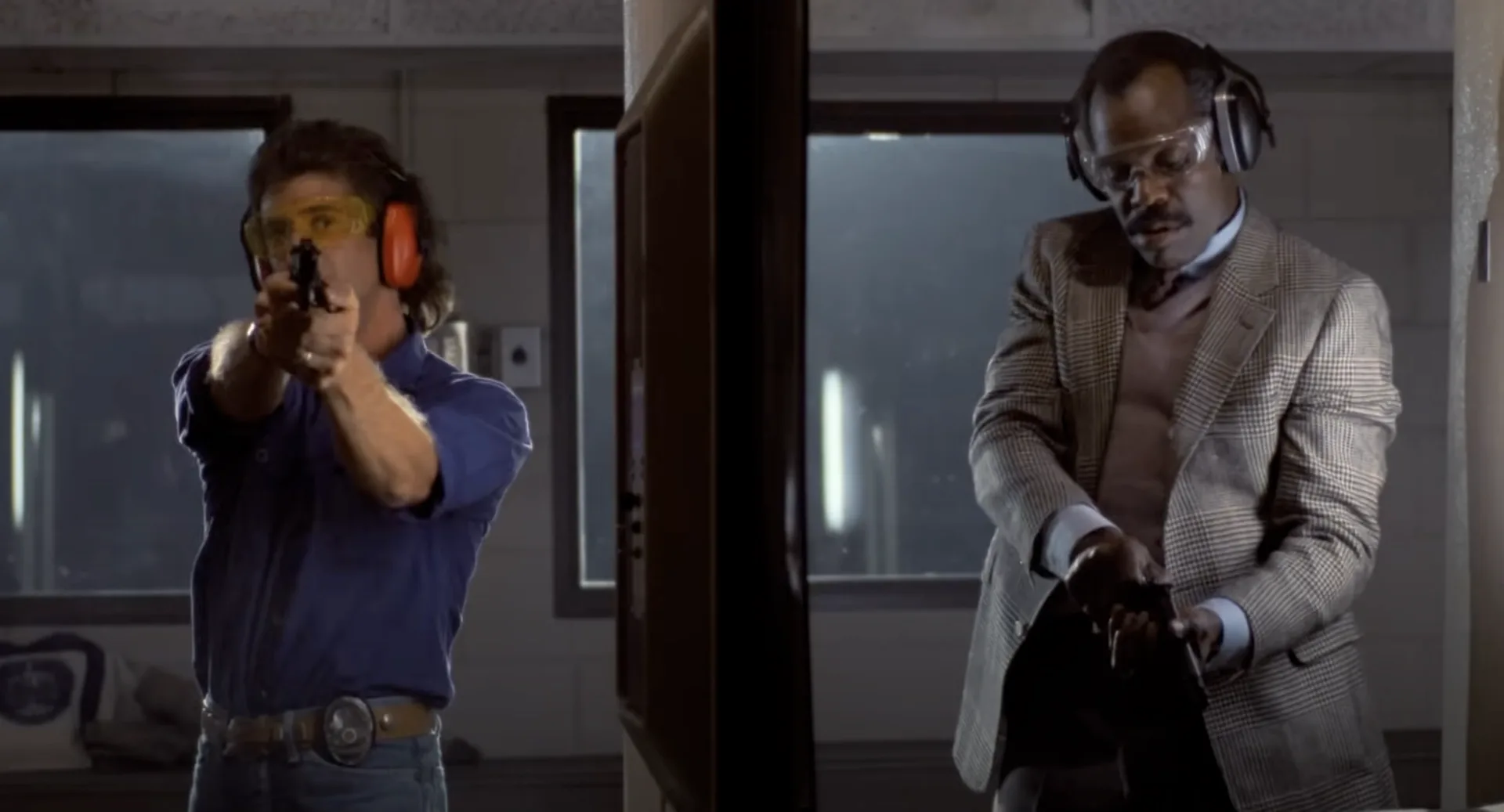
Last night I watched the new 4K remaster of Lethal Weapon (1987) for what must be the 20th time. Maybe more. I’ve lost count. But this time was different. Watching it in stunning 4K, with that rich film grain and those signature late-‘80s color tones, I didn’t just see the movie; I studied it.
That’s what happens when you start taking filmmaking seriously. You can’t just “watch” a film anymore. You’re watching the lighting choices, the lens decisions, the rhythm of the edits. You’re watching how it feels.
And Lethal Weapon? It still holds up, not just because of the characters or the action, but because of how it was made.
Controlled Chaos, Framed with Purpose
That film has energy. The camera moves when it needs to. The action feels spontaneous, but it’s anything but random. And that’s something I think about constantly when filming wildlife.
You can’t control an eagle swooping down or a reindeer locking horns. But you can control how you react to it. The goal is to move with the moment, not just document it, and make the viewer feel like they’re in it.
That’s where filmmaking and photography split. In photography, you hunt for the decisive frame. In filmmaking, you sculpt the energy across time. And movies like Lethal Weapon taught me that even when things are chaotic on screen, there’s still intention in every frame.
Those Film Legends Had No Monitor
The part that really hits me: when Lethal Weapon was shot, there was no monitor, no playback, no false color, no waveform. You exposed your shot with a light meter, checked your stop, and trusted your instinct, and then rolled 35mm film.
That’s real trust. In your team. In your eye. In your experience.
Today I shoot with a Burano and a SmallHD Cine7 monitor. I use false color overlays, Cine EI, custom LUTs. I rely on tools that let me see exposure zones live, down to the IRE. I can nail skin tone or white plumage to the exact percentage in real time.
But back then? It was all calculated risk. And yet look at the result: Lethal Weapon still looks incredible today, 40 years later.
That’s not gear. That’s craft.
The Look That Stays With You
There’s something about that 1980s film stock, too. A softness in the highlights. A halation in the lamps. A subtle imperfection that makes it human. That’s what I’m chasing now with cinema glass; it’s why I moved away from razor-sharp photo lenses for video.
Because real feeling isn’t always tack sharp.
Whether it’s the character of anamorphic flares or the organic roll-off from older lenses, I’m starting to care less about “perfection” and more about presence. And watching a classic like Lethal Weapon, you realize how powerful a strong visual identity can be.
Wildlife Needs Tone, Too
When I’m filming wildlife, it’s easy to get caught up in the technical challenge: finding the subject, getting focus, nailing exposure. But what keeps people watching isn’t just the animal. It’s the tone of the sequence.
Lethal Weapon is a buddy cop movie, but it has a soul. It’s gritty, emotional, stylish. Every frame has mood. That’s what I want in my wildlife work. Not just a record shot of a bear, but a scene that feels like something, a moment that belongs in a story.
That’s when it becomes film, not just footage.
Time Travel and Mastery
If I could go back in time, I wouldn’t visit a red carpet or some premiere. I’d go back to the set of Lethal Weapon. I’d stand beside the DP, watch them light a night scene on real film. No safety net. No digital fix-it-in-post. Just raw, analog mastery.
That’s what inspires me now: not just what I shoot, but how I shoot it.
And Yeah… I’ll Probably Watch It Again
Lethal Weapon may be an action movie on the surface, but to me, it’s a lesson in cinematic storytelling, visual tone, and confident camerawork under pressure. And the fact that they did it all on film? That’s the part that makes me sit up straighter next time I roll my own camera.