Craft
Why Wild Dogs Became My Favourite
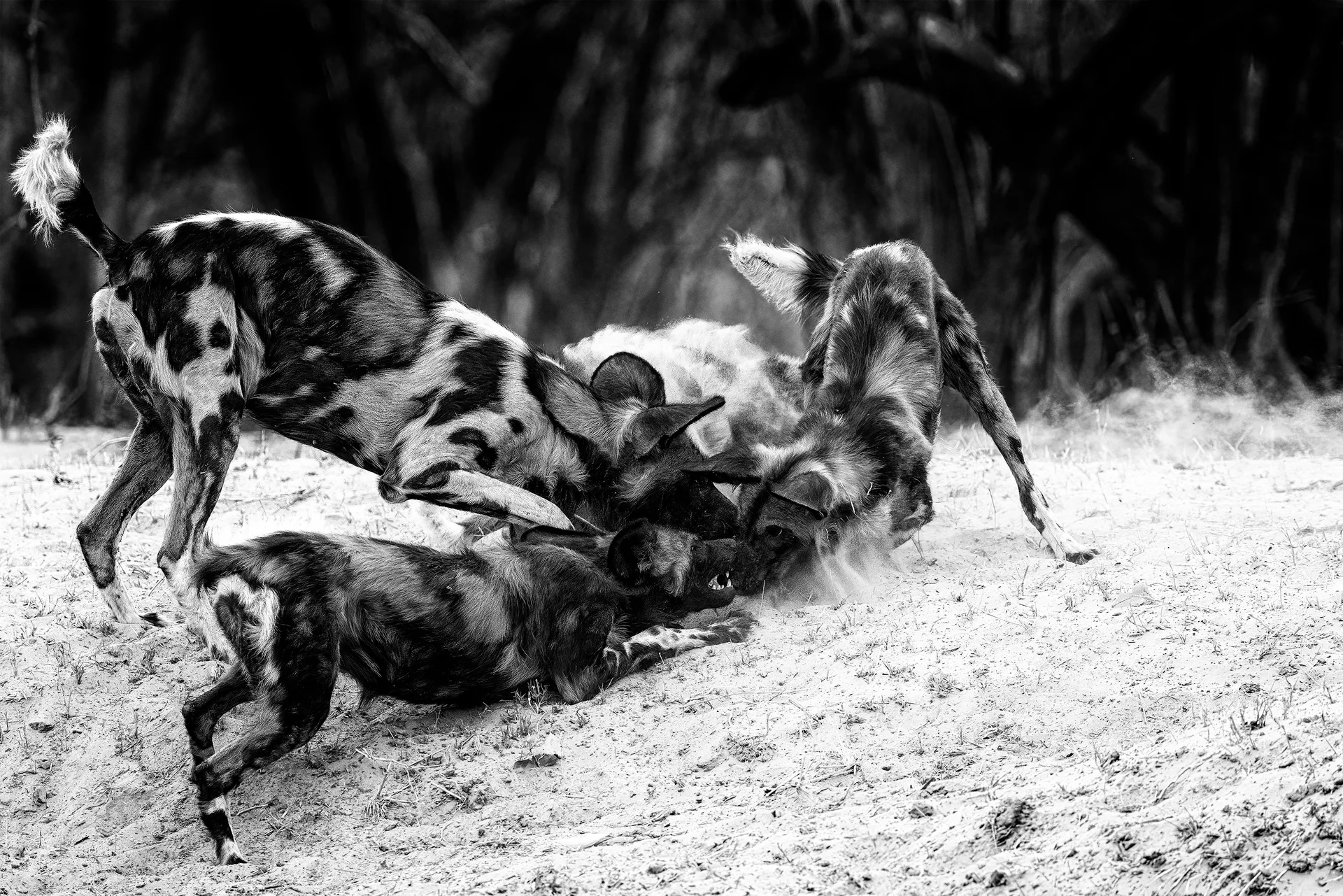
The other night at dinner on our photo tour, the conversation turned to favourite animals. Most people around the table chose lions, which is understandable. A lion is a lion. Powerful, iconic and always impressive.
I said wild dogs.
A few years ago, that would not have been my answer. Before I had spent proper time with them in the wild, I was probably a little dismissive. They were interesting, of course, but still just wild dogs. Given the choice, I would have picked a lion, leopard or almost any of the other classic African predators.
That changed the first time I followed a pack that was hunting.
Once a pack starts moving, it is difficult to look away. They do not depend on one explosive attack in the way many other predators do. They split up, regroup, communicate and keep going. A chase can cover several kilometres, with the dogs reaching speeds of around 60 km/h.
Estimates vary, but their hunting success is often placed somewhere between 60 and 80 percent. Lions are usually closer to 25 or 30 percent. The numbers are impressive, but watching them explains far more than the statistics do. Wild dogs succeed because the whole pack works together.
That cooperation runs through almost everything they do. Usually only the dominant pair breeds, but the entire pack helps care for the pups. Food is shared, and sick or injured members are supported rather than simply left behind.
They even appear to vote on when it is time to move. Researchers have observed packs using rapid sneezes before setting off, with more sneezes making a departure more likely. It sounds almost made up, but it fits the animal surprisingly well. Even leaving camp can be a group decision.
I have also changed my mind completely about how they look. I used to see them as slightly scruffy dogs. Now I think they are among the most distinctive predators in Africa.
No two wild dogs have the same coat pattern. Each animal has its own mix of black, brown, yellow and white, almost like a fingerprint. Add the oversized rounded ears and that lean, athletic body, and they become very easy to recognise as individuals once you spend enough time with a pack.
They are also much more fun to photograph than I expected.
With lions, you can sometimes sit for an hour waiting for one of them to lift its head. With wild dogs, the problem is usually keeping up.
They often become active early in the morning or late in the afternoon, when the light is already disappearing. Then everything happens at once. Dogs are running in different directions, crossing each other, kicking up dust and constantly interacting. Plenty of frames fail completely, but when everything comes together, the photographs have a kind of energy that is difficult to get from most other predators.
You are not only photographing an individual animal. You are photographing a pack functioning as a pack.
There are fewer than 7,000 African wild dogs left in the wild, and the remaining population is fragmented and under pressure. That makes every encounter feel more important. When you find a healthy pack, especially one with pups, you want to stay with them for as long as possible.
I still love seeing lions. I do not think that will ever change.
But if the radio says there is a lion in one direction and a pack of wild dogs moving in the other, I know which way I want to go.