Craft
Why I Signed to Buy Quartr Shares
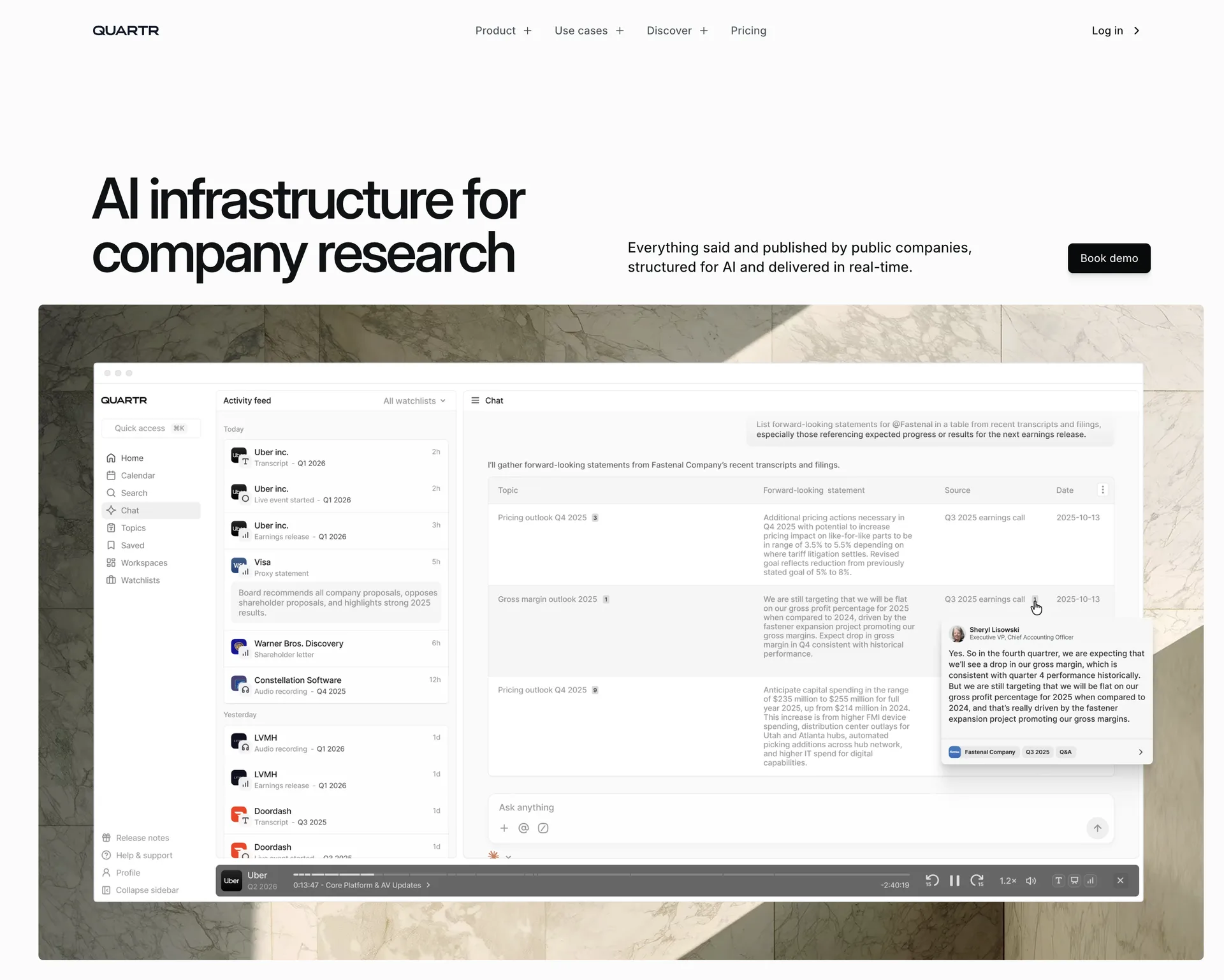
Quartr is not a secret. ARR at the end of Q2 2026 was 158 MSEK, more than double year-over-year. Retention looks healthy. The customer list is good. Altos Ventures led the latest primary round and is now the largest shareholder.
What I like about the business is fairly simple. As models get better, high-quality structured source data becomes more valuable, not less. Live calls, transcripts, filings, presentations — cleaned, structured and delivered as infrastructure rather than just another search box.
That feels like a good place to be if they keep executing.
I signed an agreement to buy shares at a price in line with the latest primary round. I was not trying to be clever and find some distressed secondary at half the price. I was comfortable buying at roughly the same level the latest institutional round had already established.
But signing the agreement does not mean I own the shares yet.
The shares are subject to "hembud", which means the existing shareholders have the right to buy them instead at the same price I agreed to pay. That process runs for 30 days.
So right now I have agreed to buy Quartr shares. Whether I actually get them is still undecided.
Then the phone started ringing
What I did not expect was the inbound. Over the last ten days, more people than usual have tried to reach me about Quartr. Unknown numbers. Messages. People wanting to sell shares. It's not that I'm the hottest investor in town, far from it, so they have called a lot of other investors before they found me.
Today I was offered another 225,000 shares and said no. That might sound strange after writing about why I wanted to buy in the first place, but there is obviously a difference between wanting exposure and wanting unlimited exposure. Position size matters. Price matters. And however much I like a company, I still want room to be wrong.
What I find interesting is simply the amount of stock that suddenly seems to be looking for a buyer. If the business is doing well, and the rumor mill says ARR is still climbing, why are so many people willing to sell?. There are plenty of explanations that do not require anything sinister. Some early shareholders have already made a lot of money. Taking some of it off the table is completely rational. In a private company, secondaries are also one of the few opportunities to get liquidity. You can believe strongly in the company and still prefer a few million in your bank account today over another five years of theoretical upside.
Once one transaction starts moving, other shareholders hear about it. Someone has found a buyer. A price has been established. Suddenly people who were not actively thinking about selling start asking themselves what they would do at that price. "Hembud" adds another layer. Existing shareholders now have to decide whether they want someone new to get those shares or whether they want to buy them themselves.
None of this tells me something is wrong with the company. It mostly tells me shareholders are human. I am human too, and historically I have been very good at selling the things that work too early while hanging on to the things that do not. That mistake has probably cost me more money over the years than most of my clever investment ideas ever made me. If AI eventually replaces me on that particular decision, I will not complain.
What I am not saying
I am not saying the deal is done. It is not. For 30 (now 28) days, existing shareholders have the opportunity to step in and buy the shares at exactly the same price I agreed to pay.
I am also not saying Quartr is a sure thing. It is still a growth company. It is still investing. The category is competitive, and things can change quickly. And I am definitely not saying the people selling know something I do not. Maybe some do. That is always possible. But most people selling shares in successful private companies probably have a much less interesting reason. They bought or received shares years ago, they are sitting on a meaningful gain, and at some point theoretical wealth becomes a house, an investment, financial freedom or simply money in the bank. There is nothing irrational about that. If the "hembud" period expires and nobody takes the shares, I will own a small piece of a company I have spent quite a bit of time thinking about. If an existing shareholder takes them instead, the shares stay with them and the contract has worked exactly as intended. Either outcome is fine. But obviously I signed the agreement because I would rather get the shares. I have increasingly come to like building and backing things with a long clock. Photography taught me some of that. Taking a company public and then actually living with it after the listing taught me more.
The difficult part is rarely finding something you believe in. The difficult part is giving it enough time to prove you right. Patience is still the part I am practicing.